I have found myself once again in a majority-white psychotherapy training group and…
Ok… wait… I say ‘found myself in’, but let me be truthful: I signed myself up for the course; I anticipated I would be the only Black person in the group; therefore, I knew what I was getting myself into…
Ok… wait… why am I metaphorically flogging myself here? Does my signing myself up for a course, anticipating that I will be the only person who looks like me and lives a life like me, automatically mean that I deserve what is coming to me?
Absolutely fucking not.
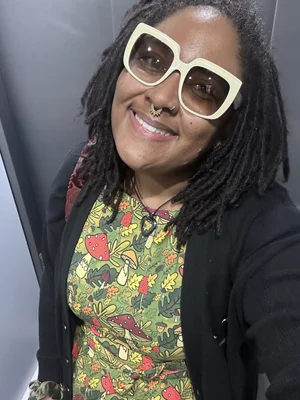
For context, I am a Black, disabled, autistic, queer human being.
I am constantly fascinated by the magic of group dynamics and processes. Yet for the first time in my six-plus years in psychotherapy groups, and forty years in the collective group of human existence, I am beginning to find language for my experience in Carl Jung's theories.
I should say plainly that Jung was diabolically racist (check out Farhad Dalal’s Jung: A Racist (1988); it’s fantastic!). Jung spent the 1920s travelling through North Africa, the American Southwest and East Africa, and he drew on African and Indigenous cultures and cosmologies to confirm and elaborate his most famous ideas, the archetypes and the collective unconscious. In doing so, he built some of the most racist arguments in the history of depth psychology, casting colonised peoples as stand-ins for the “primitive” unconscious. Even so, Black Jungian analysts such as Dr Fanny Brewster and Dr Samuel L. Kimbles have done remarkable work reclaiming and reworking his ideas through the lens of race and culture. Kimbles, with his collaborator Dr Thomas Singer, developed the concept of the cultural complex. It describes how personas, complexes, defences, projections and shame play out not only in individuals but in groups and in society as a whole. As I endlessly make sense of my experience in group settings, I have found that I automatically become a persecutor, victim and observer in a fucked up racist drama triangle as the only “other” in the group; I also become an objectified victim of these aspects of Jungian theory:
The collective persona which the in-group strongly identifies with - white, ableist, heteronormative unempathic indifference. To keep this idealised self-image intact, any traits that contradict it—such as Black, disabled, LGBTQIA+—must be denied and pushed out of the group's conscious awareness. This reminds me of Dr Benjamin Rush’s declaration that Black skin colour was the result of leprosy and that ‘the only evidence of a cure was when the skin turned white’ (Neville et al., 2009, as cited in Brewster, 2020, p. 48).
To prevent the group psyche from being annihilated, the cultural complex - a term coined by analytical psychologists like Thomas Singer and Samuel L. Kimbles - must be protected. A characteristic of complexes is that they ‘tend to be bipolar or consist of two parts. Most often, when a complex is activated, one part of the bipolar complex attaches itself to the ego [the group] and the other part gets projected onto a suitable other [me]’ (Singer and Kimbles, 2004, p. 20).
Defences become activated by the very presence of the “other”, who, from a psychoanalytic political point of view, challenges the in-group's worldview. The group ego must be protected at all costs.
The feelings that become activated - aggression, distress, vulnerability, fear, chaos and many more - cannot be held by the in-group ego and need to be disowned; therefore, the in-group projects onto the “other”. Splitting off of these confronting feelings is necessary to restore the in-group back to its equilibrium of whiteness, ableism, and heteronormativity, which is the “cure” (Neville et al., 2009, as cited in Brewster, 2020, p. 48). To move away from Jungian theory for a moment, the “other” is also feeling these projected feelings as a very felt-sense experience - a term we often use in trauma psychotherapy, coined by Eugene Gendlin to describe a pre-verbal experience. From my personal experience in groups, while in the midst of these projections, I am feeling rage, frustration, vulnerability and confusion in my chest, throat and stomach. It becomes almost impossible to determine what is mine and what belongs to the in-group and can only be processed away from the group, often in personal therapy.
The projection of disavowed feelings leaves members of the in-group feeling overwhelming shame, which becomes part of a cyclical projection: the primary, “primitive” feelings of aggression, distress, vulnerability, fear, and chaos are projected, leaving the residual feeling of shame, which cannot be held, so it is also projected. Shame of the in-group is also projected to put me back into my place, the bottom - such is the very essence of racist ideology- and to restore the group’s ego to its false equilibrium. This is evident in the shame I am left feeling about not speaking my truth because of the paralysis and confusion I feel in the moment, about the anger I display that often leaves me feeling exposed, under clothed, and the autistic ruminative thoughts about the what-ifs and next times and the exhaustion left in my disabled body in the days following.
While these theories do help my autistic brain make sense of my experiences in groups, I am mindful of how much of the theory places emphasis on the idea that this is all happening on an unconscious level, and therefore suggesting that in-group members have no control over the way they behave in groups. Jung argues that projections are not a conscious choice made by the ego, but are an unconscious process. In Aion, he writes that the effect of projections is ‘to isolate the subject from [their] environment, since instead of a real relation to it, there is only an illusory one’ (Jung, 1959, p.9), therefore harming…. The white person?
As a psychotherapist, I do understand that much of our behaviour is coming from an unconscious place; However, when you are projecting your “unacknowledged” BS onto me, it prevents you from interacting with me for what I am - a human being. Therefore, I argue that projections isolate the object from their environment.
I refuse to accept that in-group members are not fully aware of their unconscious behaviour. Especially when much of our work requires us to be part of groups; therefore, we are all fully aware of the part we play in harming others. And should not be allowed to get away with claiming deniability and apologising later. We are not children.
I’ve had Black friends describe their experiences of being in a majority-white psychotherapy group as being ‘whipped in the middle of the room'.
I want you to just pause and sit with that image for a few seconds.
As a late-diagnosed autistic person, I struggle to understand humans at the best of times; being in a group in the middle of everybody’s unprocessed emotions does physically feel like being whipped, lashings of leather coming at me from different directions. And linking this back to the persona of whiteness and the shadow complex, I recently came across the term “dyaesthesia aethiops”, a term coined by Dr Samuel Cartwright, which is ‘evidenced by disobedience, answering disrespectfully and refusing to work. The commonly prescribed cures were beating [slaves] mercilessly and forcing the captive to undertake even more taxing and difficult labor’ (Neville et al., 2009, as cited in Brewster, 2020, p. 48).
Slavery is a traumatic part of history that white society prefers to be left unprocessed. From a cultural perspective, it is a shadow - what Jungian analysts describe as parts of the self that you cannot bear to face. In Aion, Jung describes the shadow as the following:
… a moral problem that challenges the whole ego-personality, for no one can become conscious of the shadow without considerable moral effort. To become conscious of it involves recognising the dark aspects of the personality as present and real. This act is the essential condition for any kind of self-knowledge, and it therefore, as a rule, meets with considerable resistance. Indeed, self-knowledge as a psychotherapeutic measure requires much painstaking work extending over a long period. (Aion, 1959, p.8).
The fact that personal psychotherapy alongside psychotherapy training is not enough of a ‘psychotherapeutic measure’ for psychotherapists to understand and take accountability for how the dark aspects of their personalities show up in groups speaks volumes about the quality standards of the psychotherapy field, doesn’t it?
Black Jungian analysts explore the shadow within the context of the collective unconscious - a deep, inherited layer of the human mind shared by all people, containing universal symbols and instincts. This is so important in Black Jungian theory because Jung attributed the shadow to the “primitive” peoples of the African and Indigenous peoples:
‘dark characteristics - that is, the inferiorities constituting the shadow - emotional nature, a kind of autonomy, and accordingly an obsessive or better, possessive quality… Affects occur usually where adaptation is weakest, and at the same time they reveal the reason for its weakness, namely a certain degree of inferiority and the existence of a lower level of personality. On this lower level, with it uncontrolled or scarcely controlled emotions, one behaves more or less like a primitive, who is not only the passive victim of his affects but also singularly incapable of moral judgment’ (Jung, 1951/1968, para. 15 as cited in Brewster, 2020, p. 50).
In the Introduction to Encountering Jung: Jung on Evil, author Stein (1995) says: ‘Filled with righteous indignation, persons can attack others for perceiving in them what is unconscious shadow in themselves, and a holy war ensues’ (Stein, 1995, as cited in Brewster, 2020, p. 51).
The group ego must be protected at all costs.
To conclude, let us recap: I signed up for a course that requires me to participate in a group. However, my presence threatens the group's ego. Defences are activated; the in-group must protect themselves from the feelings that arise within the group - they do this by projecting those feelings onto me, so that the group ego can survive the process.
All because I am Black.
And regardless of my other intersectional identities, the colour of my skin is a representation of the “primitive” aspects of the self the in-group hates about themselves.
Making my skin colour the perfect invitation to receive the group’s shadow.
Let’s unpack what I just said there -
Perfect - is without fault, free from mistakes, best suited for its purpose
Invitation - connotes a desire from my side of the group, to invite, to attract, to welcome
Receive - to accept, to subject oneself to
But in the context of what we are discussing here - racism within group dynamics - although group psychotherapists argue that the group process is an ideal setting to understand social interaction on a micro level, what is happening to me isn’t perfect; the behaviour of othering is an abhorrent way to treat another human being. I do not want to be othered. As previously mentioned, my signing up for a course is not my invitation to attract racism; I do not deserve to be subjected to racism by a gang of peers - because that's what an in-group is - a gang. I am a human being and deserve to be treated as such.
Having to spell this out absolutely infuriates me in an all-consuming way.
References
Brewster, F. (2020). The Racial Complex: A Jungian Perspective on Culture and Race. Routledge, Taylor & Francis Group.
Dalal, F. (1988). Jung: A Racist. British Journal of Psychotherapy, 4(3), 263–79.
Jung, C. G. (1968). Aion: Researches into the phenomenology of the self (R. F. C. Hull, Trans.; 2nd ed., Vol. 9, Pt. 2). Princeton University Press. (Original work published 1951).
Singer, T., & Kimbles, S. L. (Eds.). (2004). The Cultural Complex: Contemporary Jungian Perspectives on Psyche and Society. Brunner-Routledge.